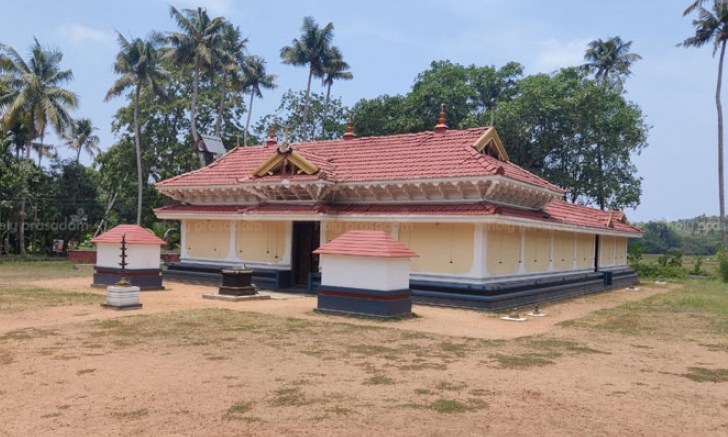
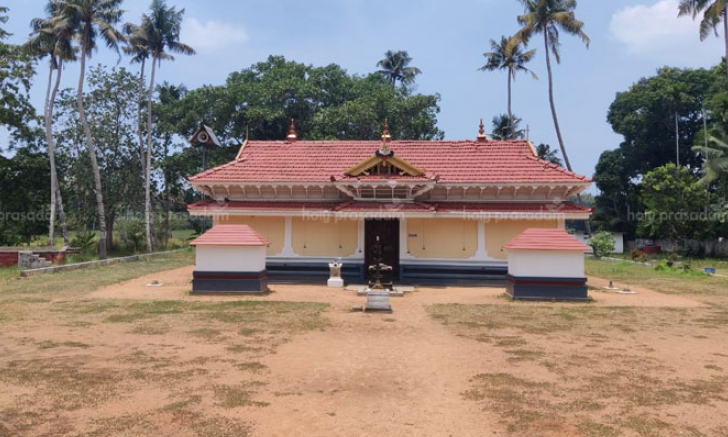
Sree Kallada Bhagavathy Temple, situated in Porathissery near Irinjalakuda in the Thrissur district of Kerala, is a revered shrine deeply woven into the cultural and spiritual fabric of the region. Dedicated to Kallada Bhagavathy, the temple is unique among Bhagavathy temples for its inclusive traditions and community-based administration. Unlike many temples where rituals and customs are determined by traditional landlords or prominent Tantric authorities, the practices here evolved through the participation and leadership of the local Avarna communities, reflecting a remarkable legacy of social inclusiveness and self-governance. Although no written records exist regarding its origin, the temple’s history is preserved through oral traditions passed down through generations. According to
more local belief, nearly four centuries ago, a woman from a prominent ancestral family in Porathissery, unable to bear children despite years of marriage, returned to her maternal home and dedicated herself to intense prayer and penance before Bhagavathy. Her devotion became so profound that she ultimately sacrificed her life, and it is believed that her spirit merged with the Goddess herself. The Bhagavathy was later brought to Porathissery by a Velichappadu and consecrated in the ancestral household. Guardian deities (Ghantakarnan) accompanying the Goddess were also consecrated nearby, one at the village boundary in a place now known as Kandaramthara and the other beside the main deity. Over time, the original family expanded into several branches, and temple administration gradually evolved to include more families and residents of the area. Despite being located between influential religious and social centres such as the Koodalmanikyam Temple in the south and Peruvanam in the north, the people of Porathissery successfully preserved their distinct traditions of worship without external domination. As the region witnessed social transformation and population growth, newcomers became part of the local community, strengthening the temple’s role as a centre of unity and harmony. In response to these developments, the Goddess was ceremonially relocated and reconsecrated on the second Tuesday of the Malayalam month of Makaram at Thuruprarambu, an agricultural settlement. The name “Kallada Bhagavathy” is believed to have originated from the stone platform or structure, known locally as a kallada, upon which the deity was consecrated. A cherished tradition associated with the temple recalls the Goddess proceeding to the Thurukayi pond for a ceremonial bath. During her return, rain began to fall, and a woman sheltered the deity with an umbrella. This event is commemorated annually through the distinctive Thrukaikkuda procession conducted during the temple festival. In its early years, the temple’s principal celebration centred on Thottam Pattu, ritual songs dedicated to the deity. Over time, these observances evolved into a grand annual festival that attracts devotees from diverse communities, transcending caste and religious boundaries. The temple’s reputation as a centre of faith and communal cooperation continued to grow, inspiring efforts to strengthen its spiritual vitality. In 1991, an Ashtamangala Prasnam conducted under the guidance of the renowned Tantric scholar Paravur Sreedharan Thanthri indicated the need for reconstruction and reconsecration of the temple. Acting upon these findings, the community undertook an ambitious rebuilding project, culminating in a major reconsecration ceremony in 1996 under the leadership of Karumathra Vijayan Thanthri. Significantly, the temple was bestowed with the rare Shadadhara Prathishta, a complex six-tiered consecration ritual usually reserved for major temples of exceptional spiritual importance. Following this landmark event, the temple experienced remarkable growth in prominence and devotional activity. Today, Sree Kallada Bhagavathy Temple stands among the respected Bhagavathy shrines of Kerala, drawing devotees who seek the blessings of the Goddess for protection, prosperity and well-being. Beyond its rituals and festivals, the temple represents a living heritage that reflects centuries of agricultural life, community solidarity and evolving spirituality. The Goddess is revered not merely as a presiding deity but as the nurturing Mother of the land, embodying the strength, compassion and resilience that have sustained generations of devotees. Through centuries of change, Kallada Bhagavathy has remained a unifying force, inspiring faith, brotherhood and cultural continuity among the people of Porathissery and beyond. The temple’s enduring legacy lies in its ability to blend tradition with inclusiveness, preserving a unique identity while embracing social progress. As a symbol of devotion, cultural heritage and collective memory, Sree Kallada Bhagavathy Temple continues to illuminate the spiritual landscape of Kerala, serving as a sacred centre where history, faith and community converge in enduring harmony.

 Please wait...