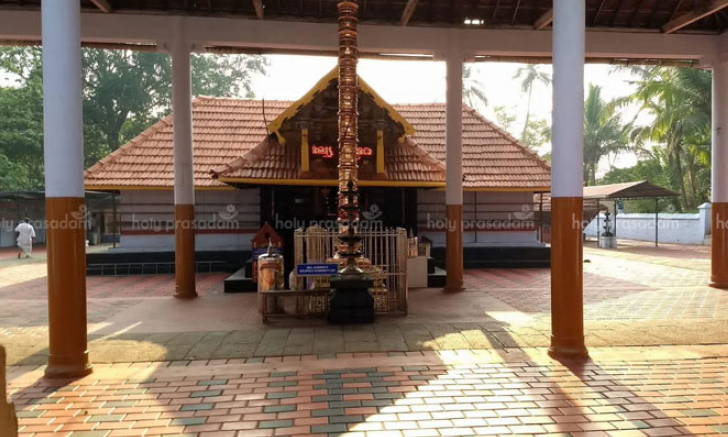
Arakurussi Udayarkunnu Bhagavathy Temple, located about 750 meters north of Mannarkkad town in Palakkad district, stands gracefully on the western banks of the Kunthippuzha River, which originates from the scenic Sairandhri region of Silent Valley. The temple is deeply rooted in the history and traditions of the Kunnathattu Madampi lineage of the Muppil Nair family of Mannarkkad. Historical accounts state that when the family migrated from Valampur near Angadippuram to Arakurussi, they brought along their Kula Paradevatha, the family deity, and installed the goddess in the backyard of their ancestral residence. Initially, the deity was worshipped in the form of
more a Daru Vigraham (wooden idol), which was later replaced with a Shila Vigraham (stone idol). As a dedicated temple was eventually constructed at a place known as Udayarkunnu, the goddess became affectionately revered as “Udayarkunnilamma.” Temple houses several sub-deities, including Lord Ganapathy, Lord Ayyappan, and Bhadrakali, while Lord Shiva is accorded a position almost equal to that of the main deity rather than being considered merely a sub-deity. The temple is especially renowned for its traditional offerings such as Koottu Payasam and Chathurshatham, particularly during festival occasions. Arakurussi Bhagavathi Temple is also recognised as one of the major centres in the Malabar region for Kalampattu rituals, with nearly 200 Kalampattu offerings conducted by devotees beginning from the first day of the Malayalam month of Karkidakam. During Karkidakam, the temple hosts several important rituals and devotional events, including Aanayoottu (feeding of elephants), Maha Ganapathy Homam, Prasada Oottu (annadanam), Thalappoli during Mandalakalam, and Lakshadeepam. The Prathishta Dinam (installation anniversary) is observed on the Revathi star in the Malayalam month of Kumbham. The temple’s grand annual festival, widely celebrated as “Mannarkkad Pooram,” commences on the Makaryam star of Kumbham and continues for eight days. One of the most captivating highlights of the festival is the sacred Aarattu ceremony, during which the deity is ceremonially taken for ritual bathing twice daily for seven consecutive days following the Purappadu procession. In addition to the Pooram celebrations, Navaratri is also observed with great devotion and spiritual fervour at the temple.
 Please wait...