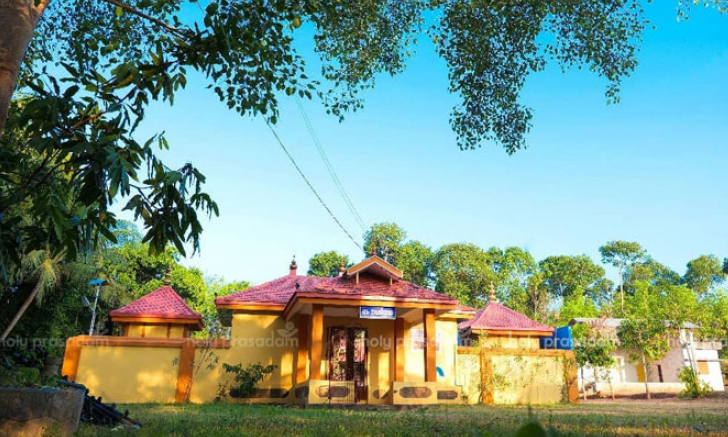
The
temple is considered to be symbolic of Dravidian culture. The Siva Jyothi
Lingam faces the west. The main consecration of Siva Jyothi, a combination of
Siva and Shakthi, represents the ancient mode of worship followed in the
Sangha period from BC 500 to AD 2. Mahakavi Shakthibhadra, the founder of
Chenneerkara Swaroopam and the author of Aaschryachoodamani, is believed to
have given up the name Rama from his name, Ramabhadra and adopted Shakthi in
its place after performing worship here. The Sidha Sadyojathan and his
companion started from Pallickal and reached
more
Kuttiplavu in Aikkada. Sadjyotha
went to Changa's house, and his companion went to Thekkumpuram. Sudha drank the
water offered by the lady of the house and went to Choorakunnil mountain for
meditation as suggested by her. He disappeared. The people who came to the
mountain the next day felt the effulgence of Lord Siva there. The Kochu mala at
the base follows Dravidian, Koula, Saiva and Buddhist traditions of worship. The
most important offering is a set of betal leaves. Climbing the mountain,
Guruthy and Muhoortha oottu are important offerings. Oorali, a powerful
representation of Dravidian culture, used to be worshipped here. The rituals of
Patayani and Malaunarthal, which were performed here in ancient times, have been
revived. One unique offering here is Aayiram kay nivedyam. Devotees bring
Poovan bananas that have been cultivated in their own compounds and offer 1000 of
them before the Lord on the 41st day of the Mandala period. Ganapathy,
Bhuvaneswary, Rakshass, Yogeeswaran, Karinkali Moorthy, and serpents are
consecrated here. Offering of Malar (fried paddy), Jaladhara, Rudra sooktha
archana, Mruthyunjaya homam and Panthiru nazhi are important here. The annual
festival is on the day of the star Chothi in the month of Kumbham.

 Please wait...