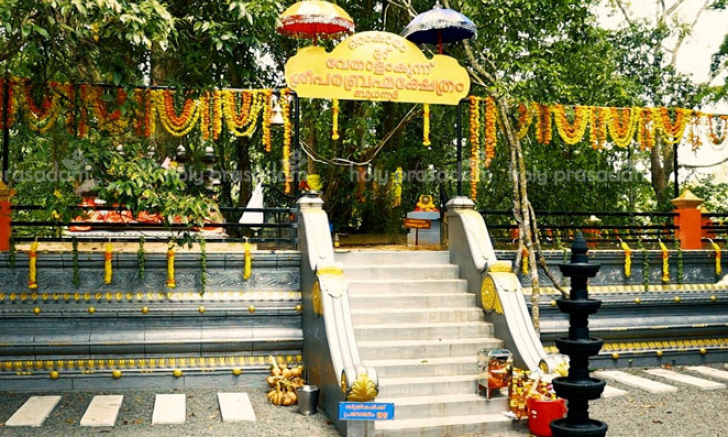
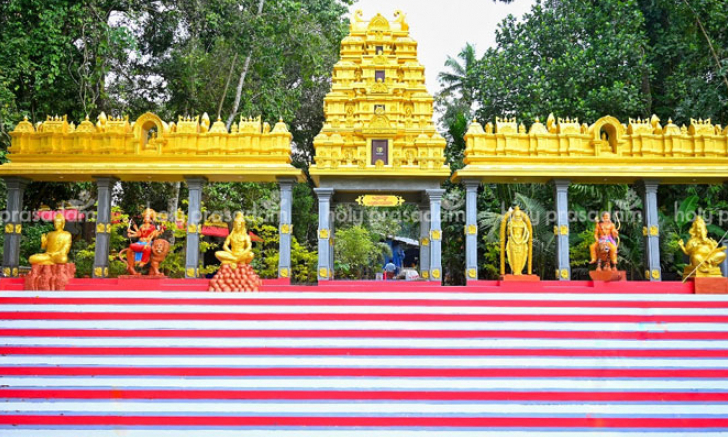
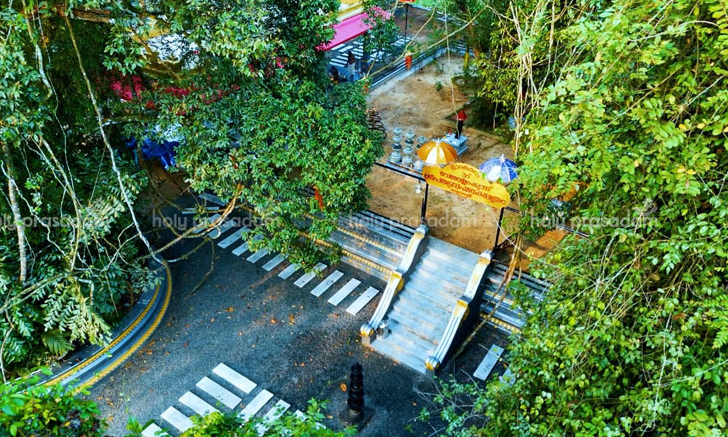
Vethalamkunnu Parabrahmakshetra is a unique Siva temple located in Budhanoor, in Chengannur Taluk of Alappuzha district, Kerala, India. The temple is dedicated to the formless aspect of Lord Siva, revered in Hindu philosophy as Paramatma or Nirguna Parabrahmam. The temple has a history of more than 800 years. It is believed that before the year 800, the site functioned as a Buddhist place of worship. According to the concept of the divine trinity, the supreme Parabrahman manifests as Brahma with rajasic qualities, Vishnu with sattvic qualities, and Mahadeva (Siva) with tamasic qualities. The Vedas, Bhagavad Gita, and other sacred texts
more describe this supreme power as assuming form, name, and energy for the welfare of the universe. The temple continues to remain an active and sacred place of worship. Devotees believe that worshipping Parabrahma (Lord Siva) here brings spiritual relief and liberation. The temple preserves the imperishable traces of ancient Dravidian, Gotra, and Shaivite traditions that have continued for more than eight centuries. One of the unique features of the temple is that it is the only Siva temple in Kerala without a Nandikesha idol. In most Siva temples, Nandikeshwara, the sacred bull and vehicle of Lord Siva, is placed at the entrance, but this temple follows a different tradition. Another distinctive aspect is that the temple is open to the natural elements - rain, sun, and wind, since it does not have a conventional shrine or roof. The temple rituals also differ from those followed in most Hindu temples of Kerala. There are no Nalambalam, Balipura, or Theethapalli, and the rituals are not conventionally performed by priests. The temple’s spiritual concept is closely connected with serpent worship. Lord Siva, Bhadra, and Yogiswara are worshipped at the top of the hill, while serpent deities are worshipped in the caves below. The primary form of worship at Sree Vethalamkunnu Parabrahmakshetra is the chanting of the “Om” mantra. Devotees may also participate in spiritual practices such as Annadanam (offering food), Nama Japa (chanting the name of God), recitation of the Bhagavad Gita, lighting lamps, and offering coconuts, betel leaves, and Nanaya Para. These practices form an important part of the temple’s devotional tradition.
 Please wait...